What Is Your Love Language?

Many, many moons ago, while sitting in on a premarital workshop that my cousin and his then-fiancé attended, I was introduced to Gary Chapman’s book The Five Love Languages. I didn’t fully appreciate the impact of love languages until my first marriage was, regrettably, falling apart. Since that time, I have tried to understand and honor my love language, as well as that of my wife, son, family members, friends, and co-workers. It has been a gift to have this tool—it helps me better understand what makes me and others feel truly loved, valued, understood, and appreciated.
One of the most important things I’ve learned is that we often project our love language onto others. For example, people who feel loved when receiving gifts are often gift givers. Gift giving isn’t a problem in itself. The issue is that—unless the recipient’s love language is also receiving gifts—they may not feel loved by receiving the gift.
That person may be a words-of-affirmation person. In that case, the best gift you could give might be encouraging words or a handwritten note.
Oh… another important thing to remember is that you should make an effort to become bilingual. You should be able to speak your own language—and know it well. And once you understand your own, it helps to tune in to the language of others, especially those closest to you. Very often, the disconnect is small, but we all know small things can add up to a big thing.
A lot of us don’t know how to articulate our language to others without seeming critical or unappreciative. That said, no one should have to accept another person’s love language as their own. If you’re in a relationship and feel like the two of you are just a little off when it comes to understanding what makes you feel safe and loved, I’d suggest picking up two copies and reading this book together.
As I mentioned above, understanding the five love languages can also help you better understand friends and co-workers. I firmly believe this understanding has helped me be a better manager.
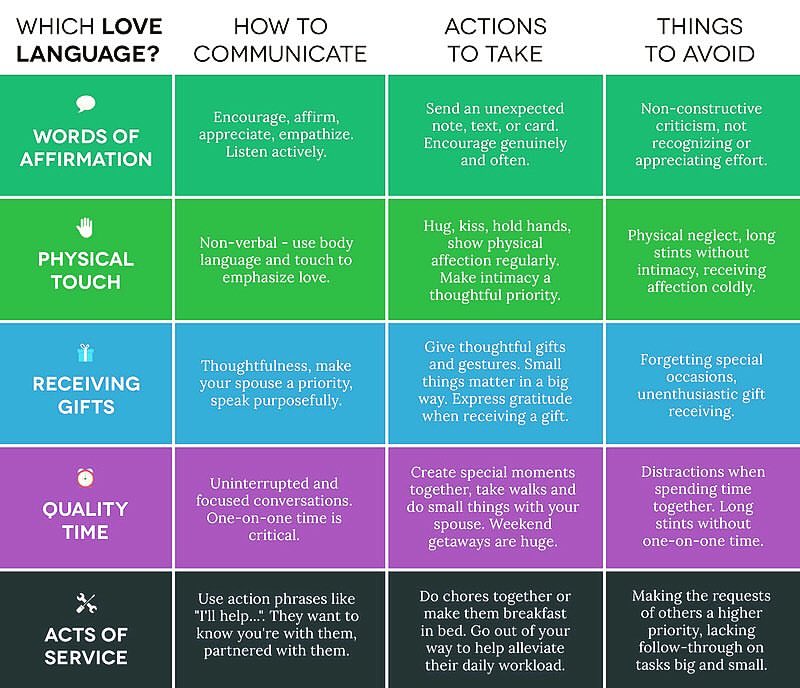
If you’re curious where you (or someone close to you) might land, this chart is a helpful snapshot of the five love languages and what each one tends to need most.
Do you know your love language? What about the love language of someone close to you?